Cruise Casinos in Transformation: Aggressive Modernization for Higher Onboard Revenue

The strategic realignment is based on two main pillars:
- Architectural Scaling: Cruise lines such as Royal Caribbean International (RCG) are leading the charge. They are planning the fleet's first two-story casino on their vessel, Legend of the Seas, debuting in 2026. It is designed to be a visual anchor on board, complete with a sweeping staircase and an elevated bar overlooking the gaming action. Furthermore, the Harmony of the Seas will, after a planned refurbishment, house what the company describes as the "largest casino at sea"—replacing a former comedy club. The expansion of these areas often comes at the expense of other entertainment venues, reflecting the priority of rapid monetization within the ship's limited space.
- Technological Depth: Here, Cashless Wagering is becoming the standard. Additionally, Artificial Intelligence (AI) is being deployed to proactively and personally tailor the gaming experience for each guest.
The investments in this segment are a direct response to the objective of maximizing Average Per Passenger Day (APCD) revenue. The casino is serving as the primary lever for driving these earnings.
The massive reinvestment in gambling areas is deeply integrated into the business model of cruise lines. Gambling at sea provides a crucial competitive advantage, helping to bear the high costs of new ship construction and fleet refurbishments.
The "Captive Audience" Principle: During a cruise, especially on sea days, passengers represent a so-called "captive audience". They are on board and seeking entertainment, a situation that onboard casinos can leverage without the external competition faced by land-based casinos.
Analysts estimate that revenue from the gaming sector accounts for a significant share—between 20 and 30 percent—of the total onboard revenue. This disproportionately high margin, generated in a relatively small area, explains the strategic importance of this segment in modernization plans. Capital expenditures (CapEx) are deliberately channeled into areas that promise the highest Return on Investment (ROI). Royal Caribbean Group (RCG), for instance, reported growth in Net Yield that was largely supported by improved onboard revenues.
The physical enlargement and redesign of casinos are the most visible evidence of the new strategy. The goal is to shift the perception of the casino from an optional activity to a central, unmissable component of the entire vacation experience.
From "Side Room" to Spectacle: Cruise lines are transforming casinos from often tucked-away gaming rooms into attractive, design-led entertainment hubs. The aggressive expansion is supported by strategic design: By placing casinos in the heart of the ship, passengers moving to main areas or shows on starboard (right) or port (left) are inevitably led through or past the gambling area. This maximizes impulse participation and, consequently, revenue.
Besides RCG, other cruise lines are also pursuing differentiation:
- The Carnival Mardi Gras features a redesigned casino in the ship's central entertainment zone.
- Celebrity Cruises focuses on creating an elegant "Monte Carlo-style."
- Norwegian Cruise Line (NCL) attracts guests with high-stakes tournaments and large prize pools.
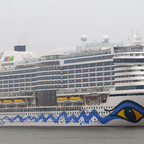
- AIDA Cruises utilizes a leaner efficiency model with purely electronic casinos.
The technical upgrade is manifested in the seamless integration of payment and loyalty systems. This facilitates detailed data collection and thus unprecedented customer profiling.
Cashless Wagering via Cabin Card: For major cruise lines, cashless wagering has become the standard. Guests use their cabin key card to place bets directly from their onboard account. This not only simplifies playing but also serves as an incentive for participating in loyalty programs. For example, the convenience fees for table games are often waived for guests in the highest loyalty tiers.
The greatest benefit of the cashless system lies in data acquisition. Every transaction made via the cabin card is digitally recorded and linked to the individual passenger. This precise Gaming History forms the basis for AI-supported predictive analytics, which can anticipate which incentives will encourage a guest to continue playing.
Compliance and Cybersecurity: The shift to cashless systems also offers cruise lines advantages in adhering to anti-money laundering (AML) and Know-Your-Customer (KYC) regulations. In the maritime environment, where the legal situation beyond the 12-nautical-mile limit is complex, this helps ensure compliance standards. However, these cashless systems are also becoming an attractive target for specialized cyberattacks, necessitating massive investments in cybersecurity.
Loyalty programs like Club Royale (RCG) are evolving from simple point systems into sophisticated, proactive customer retention tools.
AI for High-Rollers: In 2025, traditional service provided by human casino hosts is increasingly supplemented by AI. This artificial intelligence analyzes a vast array of data—from Gaming History to total onboard spending. The goal is to address the needs of High-Rollers more proactively and precisely. The AI can accurately predict which offers will motivate them to participate further.
Mobile Integration and Real-Time Marketing: Mobile apps are another important pillar. They function as personalized, digital kiosks in the player's pocket. Via these apps, casino operators can digitally customize offers and send them via push notifications in real time to specific target groups. This direct connection allows for the dynamic maximization of guest participation throughout the entire duration of the cruise. Digitization is crucial for winning the loyalty of younger, digitally savvy demographics, such as Millennials, who are driving future growth in the loyalty sector.
The aggressive modernization of onboard casinos is a logical and necessary reaction to the financial structure of the industry, which relies on maximizing onboard revenues to boost profits. The largest cruise lines are employing different forms of aggression: RCG leads with physical scaling, while NCLH scores with high-stakes events.
Given that gaming generates up to 30 percent of onboard revenues and significantly supports industry growth, the expected ROI of casino investments is extremely high. The future of the casino at sea lies in the combination of impressive architecture, advanced technology, and data-driven personalization.