Barcelona Limits Cruises: City Center Closed, Fewer Terminals, and a €30 Tax for Transit Guests
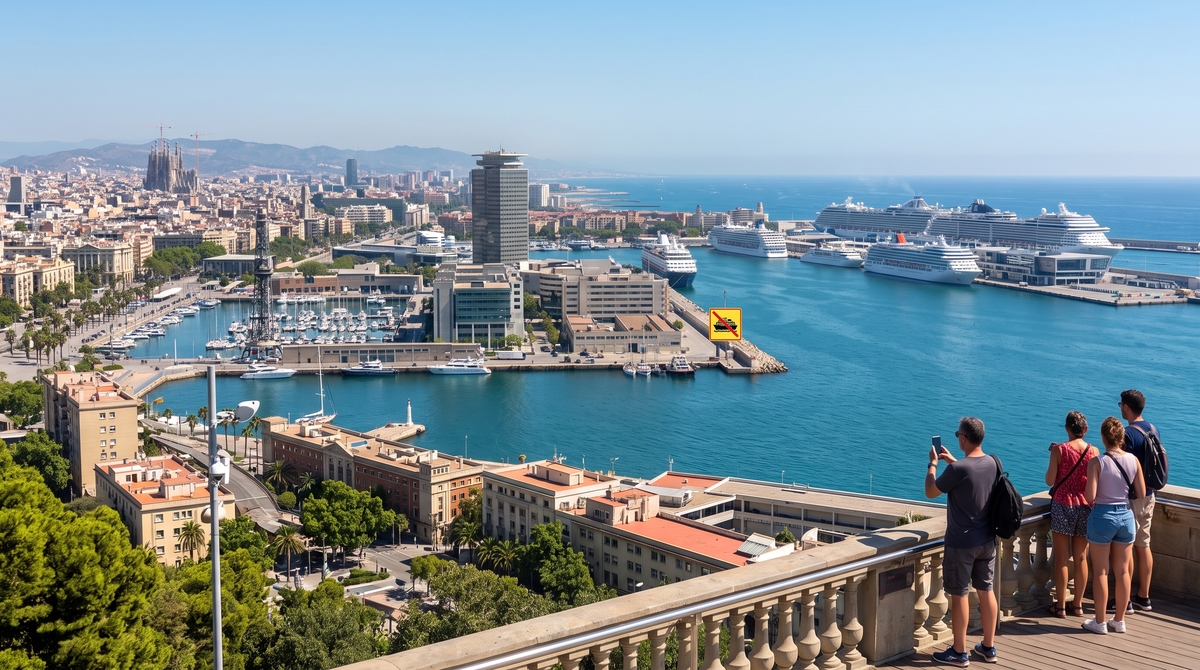
At Moll Adossat itself, the port authority (Port de Barcelona) is cutting the number of terminals from seven to five by 2030 by demolishing older facilities (A, B, and C) and building modern replacements (leaving four private terminals for Carnival, MSC, and Royal Caribbean, plus one public terminal). This reduces the port's maximum daily capacity from 37,000 to 31,000 guests. To prevent gridlock, €185 million is flowing into infrastructure: the capacity of the "Porta d'Europa" bridge will double by 2027, a dedicated Montjuïc transit corridor will route buses around the center by 2029, and digital screens will guide visitor flows in real time.
Day-trippers (transit passengers) face steep new costs: the city council is raising their total tax (including the regional levy) from the current €11 to €18 in 2027, and up to €30 by 2030. Despite sharp criticism from industry body CLIA—which notes the sector generates €1.24 billion and supports 9,500 jobs in Catalonia—the city aims to push low-yield transit calls to neighboring ports like Tarragona, Valencia, or Marseille. Instead, Barcelona is prioritizing "homeport" guests who start or end their cruises in the city and book local hotels—which is why the tax for five-star hotels was simultaneously lowered to €4.
Meanwhile, the port is investing €80 million in shore power (OPS) and a dedicated substation to curb severe exhaust pollution in nearby neighborhoods. By 2030—matching upcoming EU mandates—ships will shut down their engines at berth and plug into green electricity, cutting nitrogen oxides by 96 percent and particulate matter by 94 percent. Vessels that are not OPS-ready will face disadvantages in berth allocation. While the port is also testing transitional fuels like BioLNG, environmental groups continue to demand a total ban on fossil fuels.