MSC World Europa: Route Change in the Mediterranean Due to Cyclone Harry and Technical Issues
-
etwas MEERzeit -
January 21, 2026 at 8:38 AM -
1,269 Views -
0 Replies

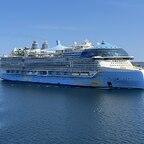
A Giant in the Wind: The MSC World Europa To understand the situation, one must visualize the dimensions of this ship. With a length of 333 meters and 22 decks, the MSC World Europa offers a gigantic surface area for the wind – the so-called "Windage Area". When a storm with speeds of over 100 km/h hits the broadside, for example fully on the port side (Backbord), the hull acts like a giant sail.
In addition, the ship is the first of the fleet with Liquefied Natural Gas (LNG) propulsion. According to reports, there were technical problems with the propulsion system ("Propulsion Loss") shortly before the storm, near the island of Ponza. Maneuvering a ship that is not 100 percent technically capable into a port like Messina – which is known for its treacherous currents – would have been an incalculable risk.
Meteorology: The Phenomenon "Cyclone Harry" The weather played the leading role in this drama. A low-pressure system, which experts referred to as "Cyclone Harry," developed tropical characteristics in the central Mediterranean – a so-called "Medicane." On January 20, extreme conditions prevailed in the Ionian Sea:
- Wind: Speeds of up to 130 km/h.
- Waves: 6 to 8 meters high, with individual "Rogue Waves" (Onde Anomale) of up to 10 meters.
- Alert Level: The Italian Civil Protection issued "Allerta Rossa" (Red Alert) for Eastern Sicily.
Especially dangerous was the "Venturi Effect" in the Strait of Messina. The strait acts like a nozzle that accelerates the wind even further. Entering safely was nautically impossible under these conditions.
Chaos on Land: Why Messina Was Not an Option The decision to skip Messina not only protected the ship but was also logistically the only alternative. The infrastructure on land had partially collapsed. In Santa Teresa di Riva, south of Messina, the water undermined the waterfront promenade so severely that a crater opened up in the road, swallowing a Fiat 600. In an even more dramatic scene, an ambulance was caught by a massive wave and thrown against a light pole. Ferry connections to the islands were suspended, schools and markets remained closed. Shore leave for passengers would have been life-threatening.
Logistical Challenge: The Transfer Instead of Messina, the ship called at the port of Naples. This triggered a massive logistical operation. Hundreds of guests who were supposed to embark in Messina had to be taken to Naples by bus. A distance of around 500 kilometers, which became a test of patience due to the severe weather and the difficult ferry situation at the Strait of Messina. Alternatively, guests could embark on January 21 at the port of Palermo, where the ship continued after the stop in Naples.
Conclusion The cancellation of the stop was a mandatory safety measure. The combination of a technical defect in the propulsion system and an extreme weather event ("Force Majeure") left the bridge crew with no other choice. For the passengers, this meant stress and program changes, but it prevented the ship and people from steering into a catastrophe.