Banana Chaos in the Solent: Storm Darragh Stalls P&O Iona
The Solent, the bottleneck for British cruise tourism and freight traffic, came to an almost complete halt between December 6th and 8th. What sounds like the plot of a disaster movie was a nerve-wracking reality for thousands of travelers and commuters. We have summarized the events and background information for you.
The trigger for the misery was the low-pressure system "Darragh." The storm swept across the English Channel and the south coast of England with wind speeds of almost 100 km/h. This corresponds to force 10 to 11 on the Beaufort scale. But the wind was not the only problem: a rare phenomenon, a so-called "negative surge," literally pushed the water out of the Solent. The result was extremely low water levels, which became a risk even for experienced captains.
In the midst of this weather chaos, the reefer ship Baltic Klipper got into distress. On its way to Portsmouth, the ship began to roll heavily in the rough seas—a dangerous movement from port to starboard and back. The forces were so enormous that the cargo securing systems failed.
It happened around 6:00 PM on Saturday evening: near the Nab Tower, between 16 and 18 containers went overboard. The content: not hazardous materials, but bananas, plantains, and avocados. Five of the containers were empty, which made them particularly dangerous as they drifted just below the water's surface, making them barely visible to radar.
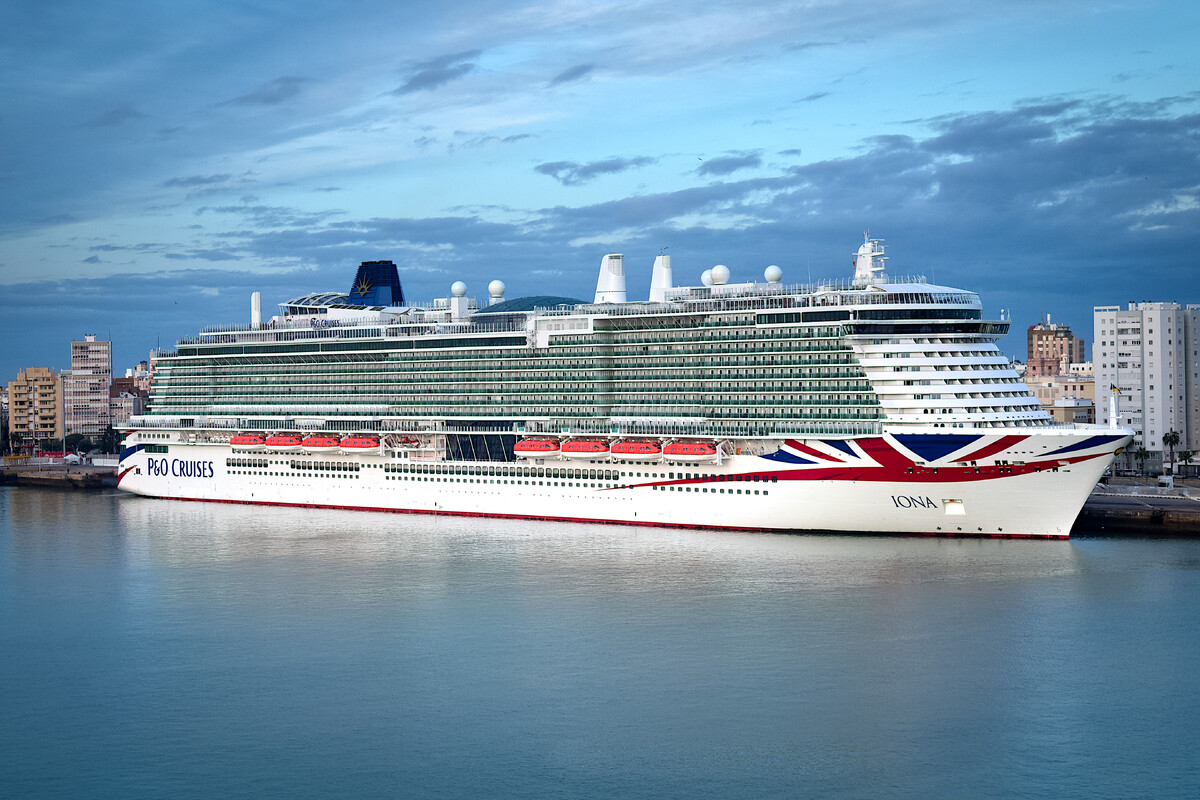
For P&O Cruises' flagship, the Iona, this meant: stay docked. The LNG giant was actually scheduled to depart on Saturday evening for a voyage to the Canaries and Madeira. But safety always comes first at sea.
Southampton Vessel Traffic Services effectively closed the deep-water channel. The risk that one of the massive steel containers could crash into the Iona's sensitive propulsion pods or hull was too great. The cruise line chose the safe path: the ship remained in port. It wasn't until Sunday noon, with a delay of almost 20 hours, that the Iona was able to cast off. To keep to the schedule, the ship must now pick up significant speed, which drastically increases fuel consumption.
While the cruise passengers "only" had to wait, the Isle of Wight was hit harder. Ferry traffic collapsed almost completely.
- Red Funnel had to suspend the operation of the fast "Red Jets" and later also the car ferries due to the weather.
- Wightlink struggled with technical failures in its fleet and the extremely low water levels. Commuters and travelers were stuck.
On Sunday morning, the "gift" reached the mainland: the first broken containers washed up in Selsey. The beach was littered with green bananas. Authorities warned onlookers against taking the flotsam—under UK law, this is a criminal offense. Cleanup teams are already deployed to salvage the steel boxes and the fruit.
This weekend demonstrated how sensitive maritime logistics can be. A single freighter with cargo securing problems, combined with a storm, can paralyze one of Europe's most important ports. For the passengers of the Iona, the vacation started bumpily, but the captain's decision was nautically absolutely correct: safety always comes first.