Green Milestone in the North: Kiel’s Ostseekai Terminal Now Powers Two Cruise Giants Simultaneously
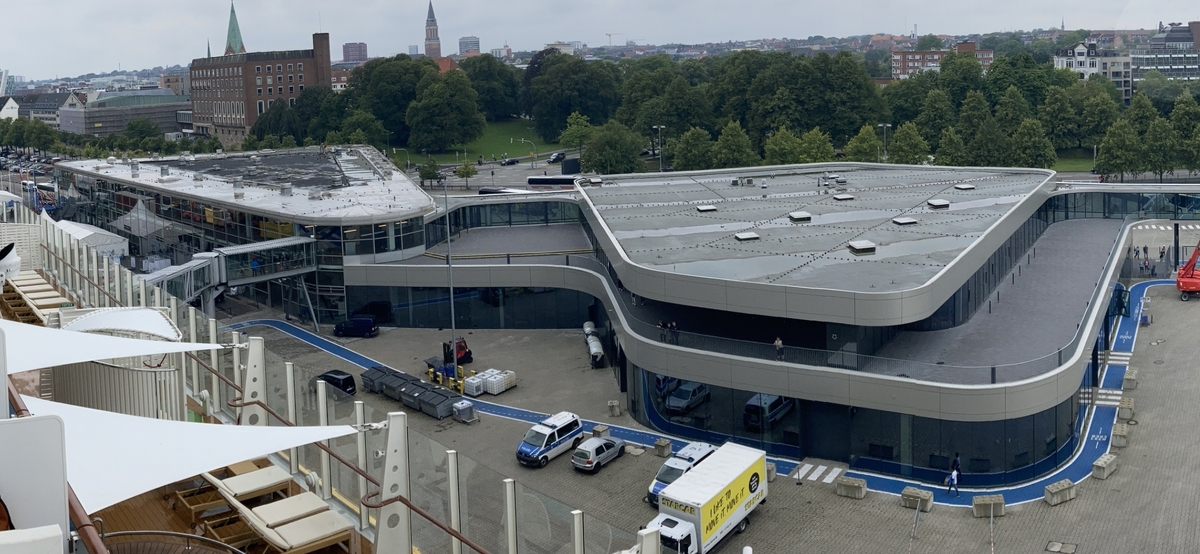
An End to the "Agony of Choice" Until the late summer of this year, dispatchers at the port faced a logistical challenge whenever two ocean giants docked simultaneously at berths 27 and 28. While the existing system delivered power reliably, its capacity was only sufficient for one of the two ships. This inevitably meant that one ship had to keep its auxiliary diesel engines running to maintain hotel operations on board.
With the technical completion in September and the now confirmed regular operation, this scenario is a thing of the past. The new infrastructure provides a total capacity of 32 megavolt-amperes (MVA). To put this abstract figure into perspective: This corresponds roughly to the energy demand of a small town with 30,000 households.
Investment in the "License to Operate" Around 50 million euros have flowed into Kiel's shore power facilities in recent years—a massive sum supported by funding from the Federal Government and the State of Schleswig-Holstein. Dr. Dirk Claus, Managing Director of the Port, sees this as far more than just a technical upgrade. It is a bet on the future of shipping that is now paying off. The port's "Blue Port" strategy aims to operate completely climate-neutrally by 2030.
This is not just about global CO2 balances, but quite concretely about local quality of life. The terminals are located in the immediate vicinity of Kiel's city center. When the diesel generators on board fall silent, it means: no particulate matter, no soot clouds, and above all, a significant reduction in noise for the residents. The low-frequency humming of the engines gives way to almost complete silence at the quay.
High-Tech Behind the Facade Technically, the port relies on proven partnerships. The system uses SIHARBOR technology from Siemens. The challenge lay in the details: The electricity from the public grid (50 Hertz) must be converted into the 60 Hertz frequency typical for ships. In addition, both ships must be galvanically isolated from each other so that no fault currents occur.
A mobile cable management system ensures that the heavy plugs are guided precisely and safely to the ship's side. Cruise lines expect speed here: power should be flowing no later than 45 minutes after the ship is "all fast." Experience from the last few weeks shows that the interaction between port workers and the ship's crew is working smoothly.
Outlook for 2026 All eyes are now on the coming season. The year 2026 will be the first year of so-called full-load operation. Forecasts assume that 80 percent of all ship calls will be supplied with shore-side electricity in the future. With the integration of AIDA Cruises and MSC, whose modern ships are already using the facility, as well as the connection of ferries at the Norway and Sweden Quays, Kiel is positioning itself in the absolute top group of "Green Ports" worldwide.
For cruise fans and residents alike, this is good news: The fascination of the great ships remains, while their ecological footprints in the port are becoming ever smaller.