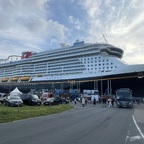
Regent Seven Seas: New Ultra-Luxury Ship Coming in 2033 – The Strategy Behind the Prestige Class

The centerpiece of the new Prestige Class is the redefinition of luxury. The ships (approx. 77,000 GRT) will be about 40% larger than their predecessors in the Explorer Class. The catch: They will only carry 10% more passengers (approx. 822 to 850 guests).
NCLH is not investing in more passengers, but in more space per guest. The space-per-guest ratio is rising to an industry-leading level. Regent is sending a clear signal: True luxury today means one thing above all – generous, personal space.
This extra space will be used for 12 different suite categories (including innovative two-story lofts) and a total of 11 dining options.
The extremely long lead time until 2033 is a clever dual strategy:
- Block the Slots: Building slots at top shipyards like Fincantieri, which specialize in ultra-luxury, are rare. NCLH secures this slot, effectively blocking competitors from getting a similar ship built in that timeframe.
- Protect Cash Flow: The NCLH balance sheet, like that of many cruise lines, is still marked by debt. A distant delivery date allows for favorable financing with low down payments. They are committing capital long-term without burdening short-term cash flow.
Despite all the strategic foresight, there is a conspicuous blind spot: sustainability.
The announcements vaguely mention "innovative" and "sustainable" technologies. However, there is no specific mention of LNG (Liquefied Natural Gas), Methanol, or fuel cells.
This is risky. Competitors like Carnival or Disney are already planning their ships for the 2029–2033 period clearly with these "Future Fuels." A ship launching in 2033, intended to sail until 2060, could quickly face regulatory problems and be considered technologically outdated without future-proof propulsion.
Conclusion: With this order, NCLH demonstrates strong confidence in the luxury market and cements its position through a smart space and financial strategy. However, whether the ship will also be technologically "Prestige" in 2033 remains the most exciting question, given the lack of detail on its propulsion.