Cruise Ship Rotterdam in Kiel: Tradition Meets Future
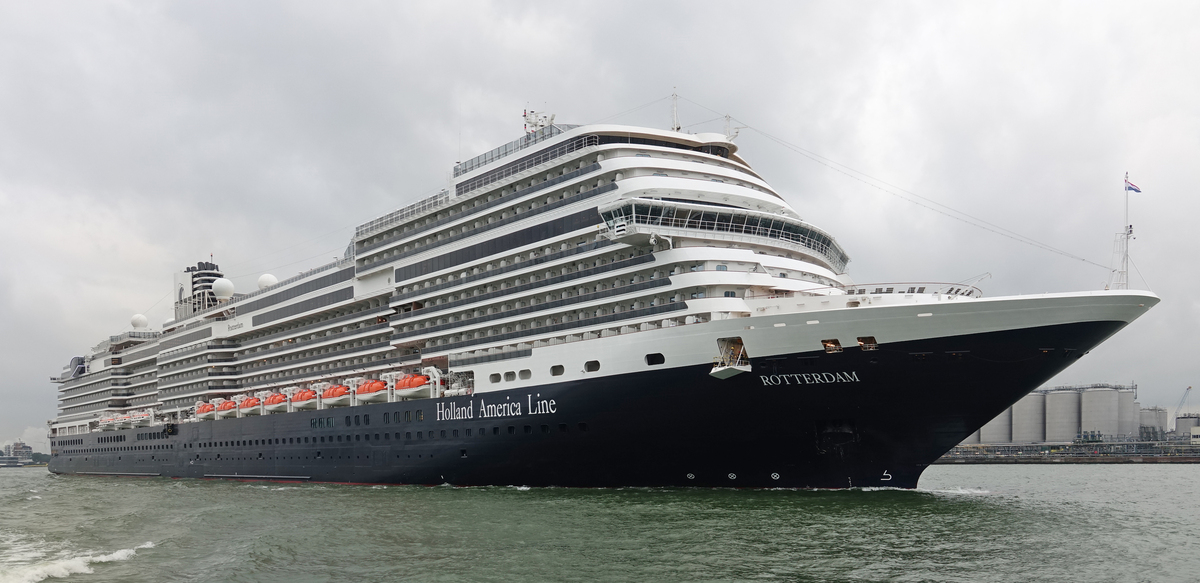
The ROTTERDAM is an impressive 299.8 meters long with a gross tonnage (GT) of 99,935. It docked punctually at 8 a.m., allowing its passengers to go ashore. After a ten-hour stay, the ship left the port again at 6 p.m., heading for Copenhagen. The stop was part of a larger Baltic Sea itinerary.
Scheduled port calls like this highlight Kiel's importance as a hub for Baltic Sea cruises, whether as a starting or ending point or as an attractive stop-over destination. The successful handling of a ship of this size demonstrates the port's high-performance infrastructure.
By the way, a look at the sailing schedules shows how dynamic the cruise industry is. Even if a ship like the ROTTERDAM has a planned port call, routes and dates can change flexibly. This makes a continuous analysis of the sailing schedules so important.
Cruise tourism is a major economic factor for Kiel and Schleswig-Holstein. Over the years, nearly 90 million euros have been invested in the port's infrastructure. This is paying off: The passengers and crew members who disembark here alone create significant added value for the region. A stop-over passenger spends an average of 24.53 euros, while crew members spend as much as 57.08 euros. In addition, many cruise passengers arrive a day before their trip and stay in hotels, which benefits the hospitality industry and local retailers.
In addition to economic viability, sustainability is playing an increasingly important role. Although the ROTTERDAM itself cannot yet use the shore power facility in Kiel, the port is sending a clear signal. Thanks to the existing shore power connections, ships can switch off their onboard generators during their stay. This reduces emissions and improves local air quality.
The visit of the ROTTERDAM once again shows that the Port of Kiel is a versatile and future-oriented player. Whether as an international cruise hub, a venue for sailing regattas, or a research center for sustainable shipping, the port is a key pillar of the regional economy.